Геофизические исследования, акустика и гидроакустика
Гидрофизическая лаборатория «Геофизик» на Горьковском водохранилище
Лаборатория предназначена для дистанционной диагностики взволнованной водной поверхности и верхнего слоя воды Горьковского водохранилища, в том числе применительно к задачам верификации спутниковых методов.Большой термостратифицированный опытовый бассейн (длина 20 м, ширина 4 м, глубина 2 м) предназначен для масштабного физического моделирования волновых процессов в верхнем слое океана и приповерхностном слое океан – атмосфера. Здесь реализован оригинальный способ получения температурной стратификации водного слоя, воспроизводящий типичный профиль глубинной зависимости температуры вод в реальном океане в соотношении порядка 1 : 100. Бассейн оборудован прямоточным высокоскоростным ветроволновым каналом для моделирования в широком диапазоне скоростей ветра (вплоть до ураганных условий). Входит в состав УНУ «Комплекс крупномасштабных геофизических стендов».
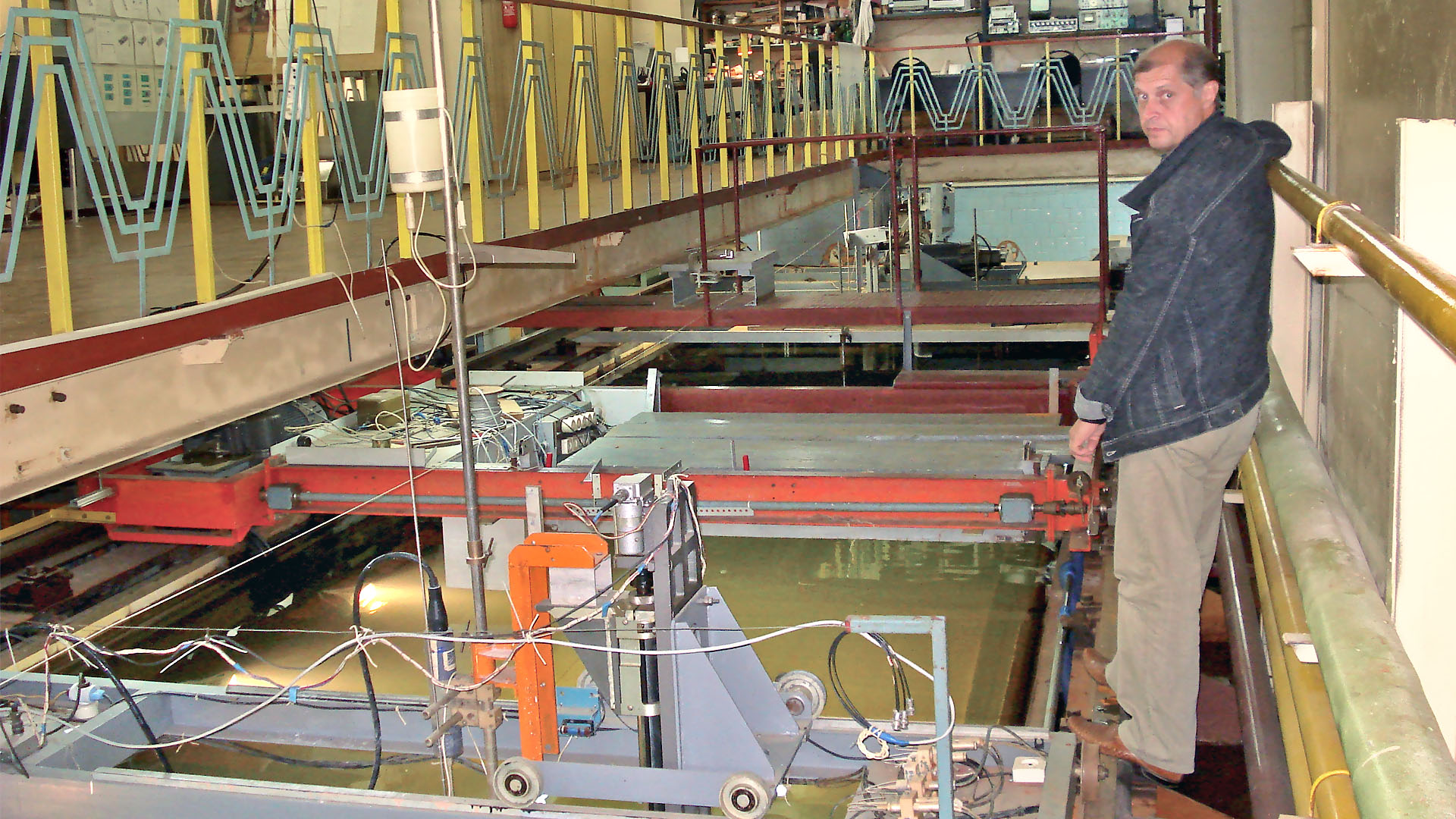
- Кольцевой ветроволновой стратифицированный бассейн (длина 20 м, сечение гидроканала 0,3×0,6 м) предназначен для моделирования динамики ветрового волнения и его взаимодействия с внутренними волнами и пленками поверхностно-активных веществ, для апробации методов дистанционного (радиолокационного и оптического) зондирования морской поверхности.
- Гидроакустический бассейн (4,5×3,5×3 м) предназначен для моделирования процессов распространения и нелинейного взаимодействия акустических волн в неоднородных средах, калибровки измерительной аппаратуры.
- Автоматизированный корабельный комплекс предназначен для регистрации радиолокационными и оптическими методами пространственно-временных параметров волнения водной поверхности в реальном времени.
- Комплекс аппаратуры для исследования атмосферного электричества, в том числе грозовой активности, предназначен для измерения вариаций электрического поля и тока проводимости в условиях хорошей погоды и во время гроз, для мониторинга грозовой активности и контроля радиоизлучения грозовых облаков в широком диапазоне частот с высоким временным разрешением.
- Морской автономный измерительный комплекс предназначен для исследования характеристик шумоизлучения и акустического портретирования протяженных источников (апертура антенны 200 м, глубина установки до 300 м, динамический диапазон антенны до 120 дБ).
- Пассивный наземный радиометрический комплекс для дистанционного зондирования термической структуры стратосферы и мониторинга озонового слоя Земли на высотах 15–70 км.
- Акустическая заглушенная (безэховая) камера (рабочий объем 100 м3, уровень шума 26 дБ) предназначена для масштабного моделирования и испытаний излучающих систем и конструкций, апробации методов акустических измерений, тестирования звукоприемных устройств.
- Стенд масштабного акустического моделирования для апробации и наладки измерительных средств, испытаний и исследований акустических моделей виброактивных конструкций.
- Комплект аппаратуры для виброакустического контроля предназначен для натурных исследований шумоизлучения и вибрационных полей различных источников.
- Низкочастотные гидроакустические излучатели различных диапазонов частот (от десятков герц до единиц килогерц) с высокой мощностью излучения и КПД (макетные образцы).
- Гидроакустические кабельные антенны (объединяющие до 64 цифровых гидрофонов) предназначены для натурных измерений и модельных исследований в области гидроакустики.
- Приемно-излучающий гидроакустический комплекс предназначен для низкочастотного акустического мониторинга акваторий мелкого моря и зондирования морского дна.
- Мобильный приемно-излучающий сейсмоакустический комплекс предназначен для диагностики поверхностных слоев земных пород и инженерной сейсморазведки методами когерентной сейсмоакустики высокого разрешения (рабочий диапазон 20–1000 Гц).
- Компьютерный кластер (64 ядра, 512 ГБ оперативной памяти) для численного моделирования акустических, вибрационных характеристик упругих конструкций методом конечных элементов.